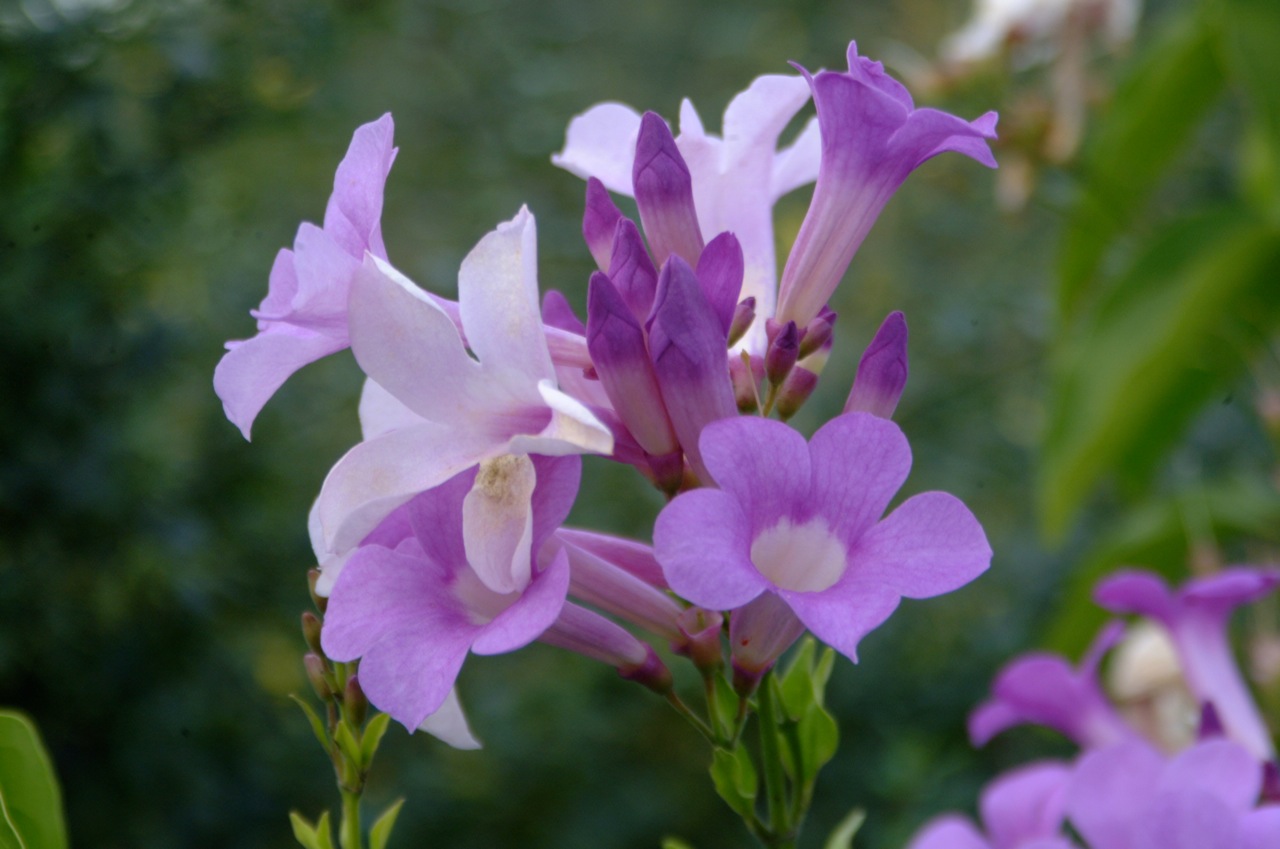
BIGNONIA alliacea (=Pseudocalymma alliaceum)
BIGNONIA capensis (=Tecomaria capensis)
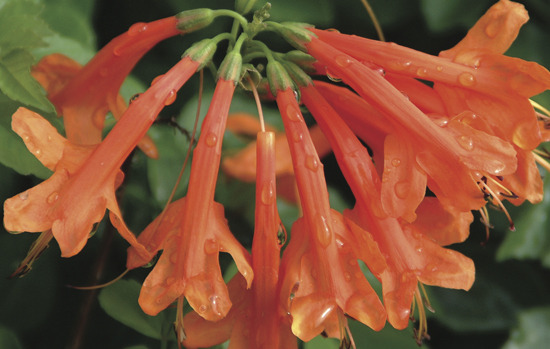
Semi-deciduous plant, ideal for hedges and to cover walls and railings. It’s a vigorous plant that, if allowed to grow freely, quickly forms large bushes with long arching branches, covered by an abundant bloom that appears in the middle of summer until the first frosts. It could be cultivated in pots.
BIGNONIA capreolata
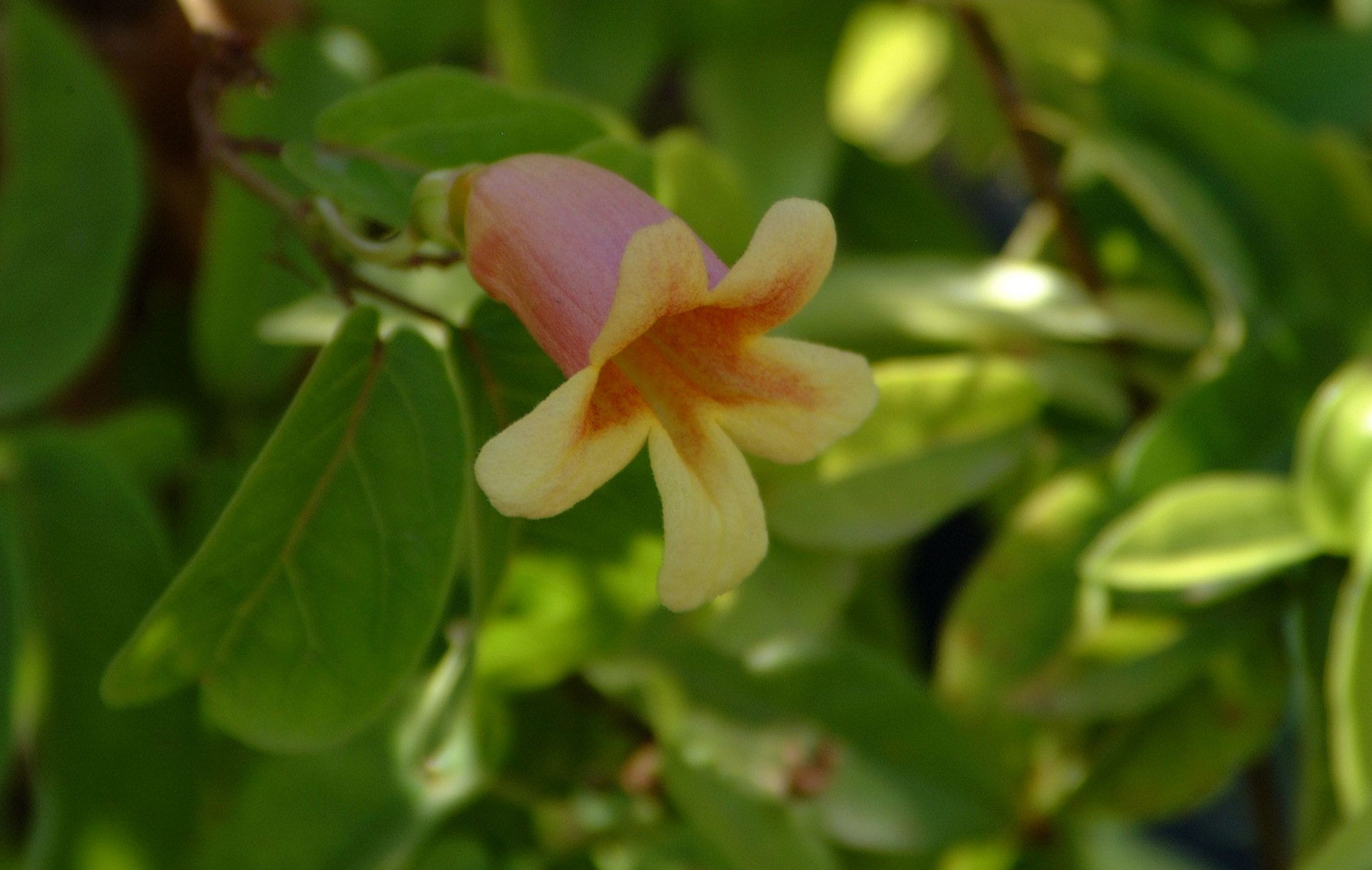
BIGNONIA cherere (=Distictis buccinatoria)
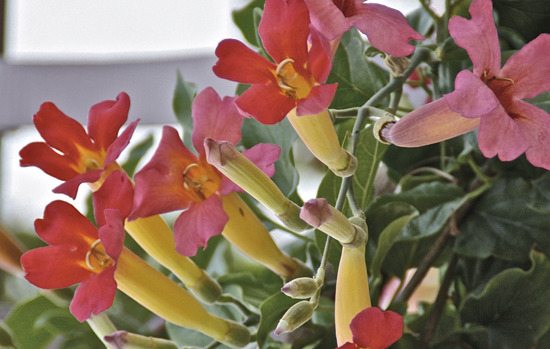
Semi-deciduous climbing plants with thin and flexible stems, ideal to cover arbors and railings. The main blooming occurs in late spring, followed by a second one which is less intense but it can last throughout autumn. This vigorous climbing plant produces very showy and particular flowers: two-tone long trumpets, yellow and red. Like many other […]
PYROSTEGIA venusta
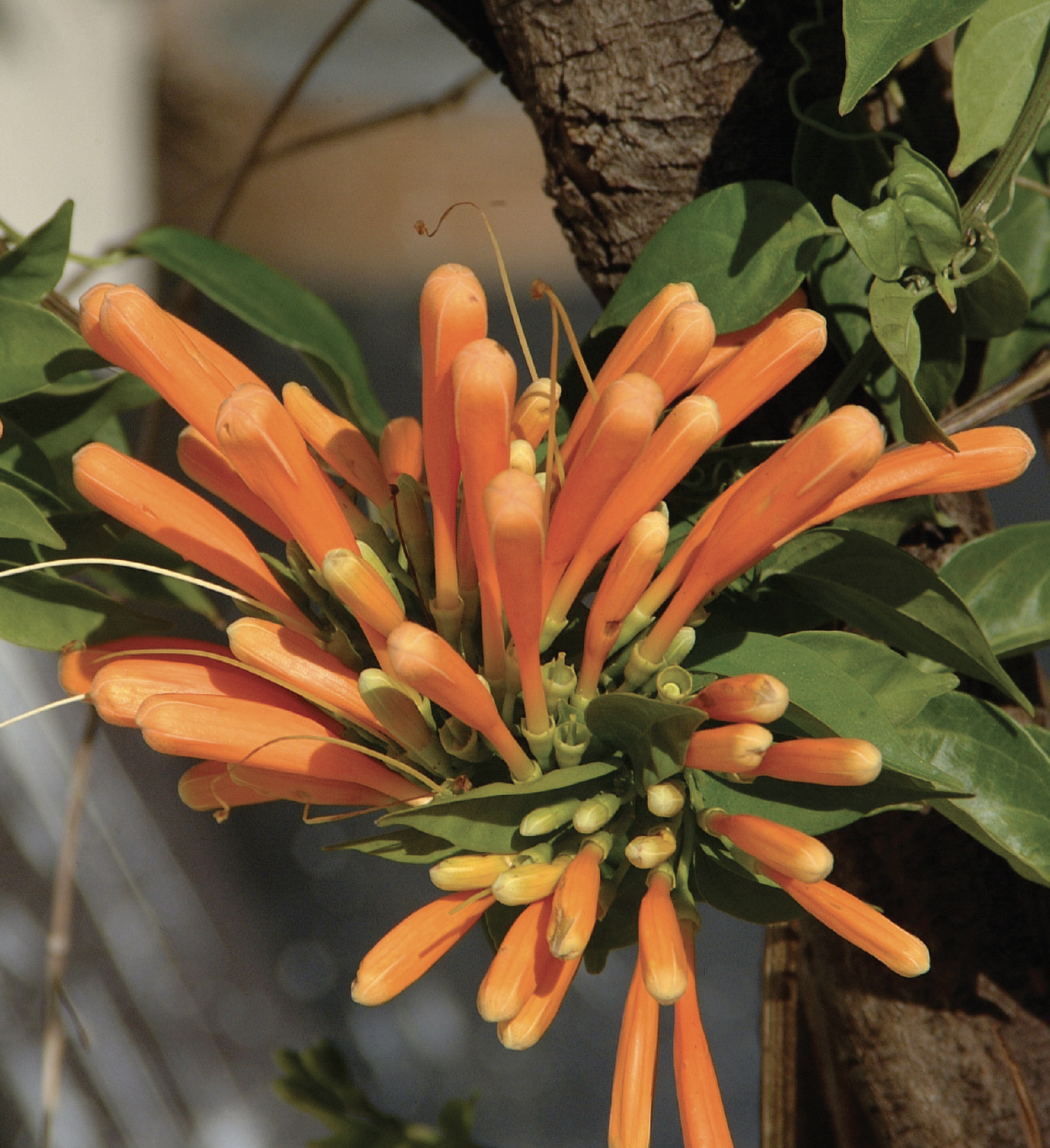
Very original and vigorous perennial and semi-deciduous climber, with a rather high growth rate, sometimes even dangerously infesting, and expanded and dense habit, native to South America: at its maximum development it can rise over 5 m in height and expand in width more or less to the same extent. Branched and well lignified from […]
BIGNONIA radicans (=Campsis radicans)
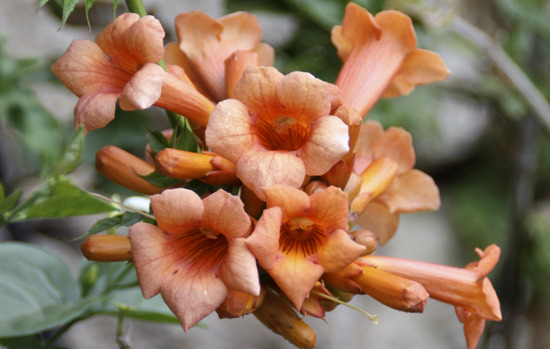
Vigorous climbing plant with thin and flexible stems, ideal for covering pergolas, railings and fences in a short time. The spring-summer flowering is abundant and consists of large and orange tubular flowers gathered in clusters, standing out very well among the deep green foliage. If left to grow freely, it behaves as a ground-cover plant. […]
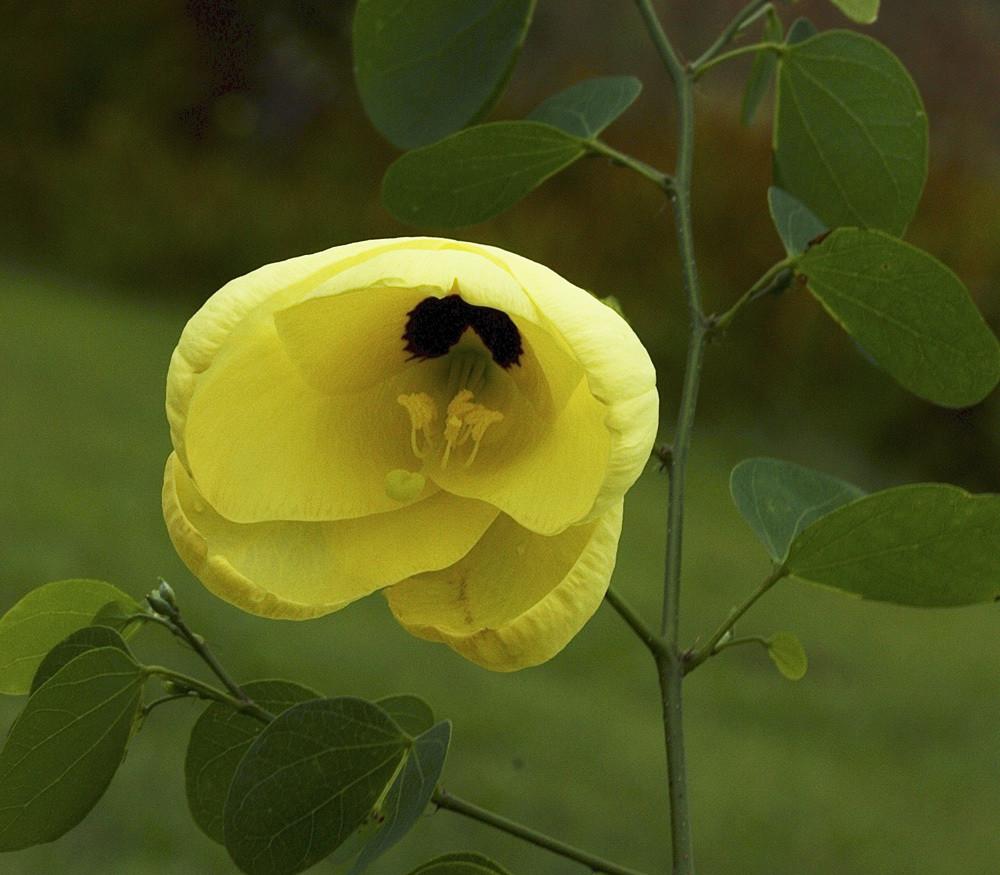
BAUHINIA tomentosa
BIGNONIA unguis-cati (=Macfadyena unguis-cati)
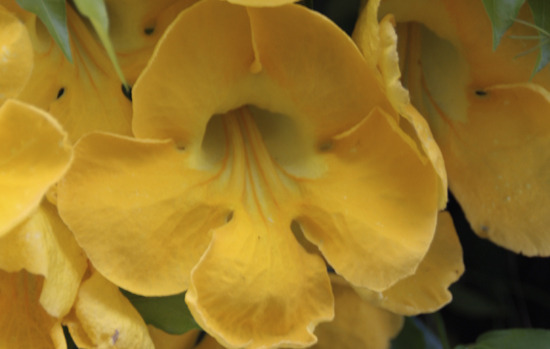
Semi-deciduous climbing plant with thin and flexible stems growing upwards through natural harpoons, similar to cat claws, that’s the reason of the name of the species. Ideal for covering arbors and railings, walls or fences. The main flowering occurs in spring and it is made up of showy yellow trumpets of considerable size; it can […]
BELOPERONE guttata (=Justicia brandegeana)
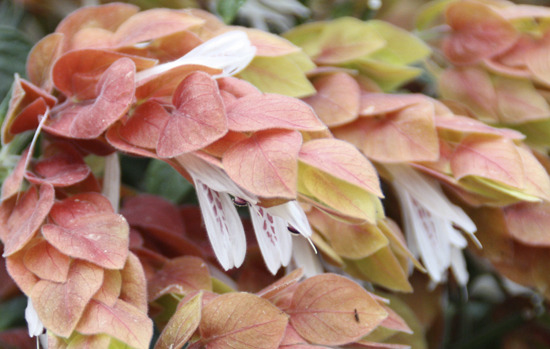
Particular bush: it is about 1-meter tall and has tomentose leaves and very unique inflorescences formed by ocher-red bracts, with white flowers inside them: the common name “Shrimp Plant” is due precisely to these bracts, arranged in succession on the apex of branches, making inflorescences look like shrimps. Blooming practically lasts throughout the year, especially […]
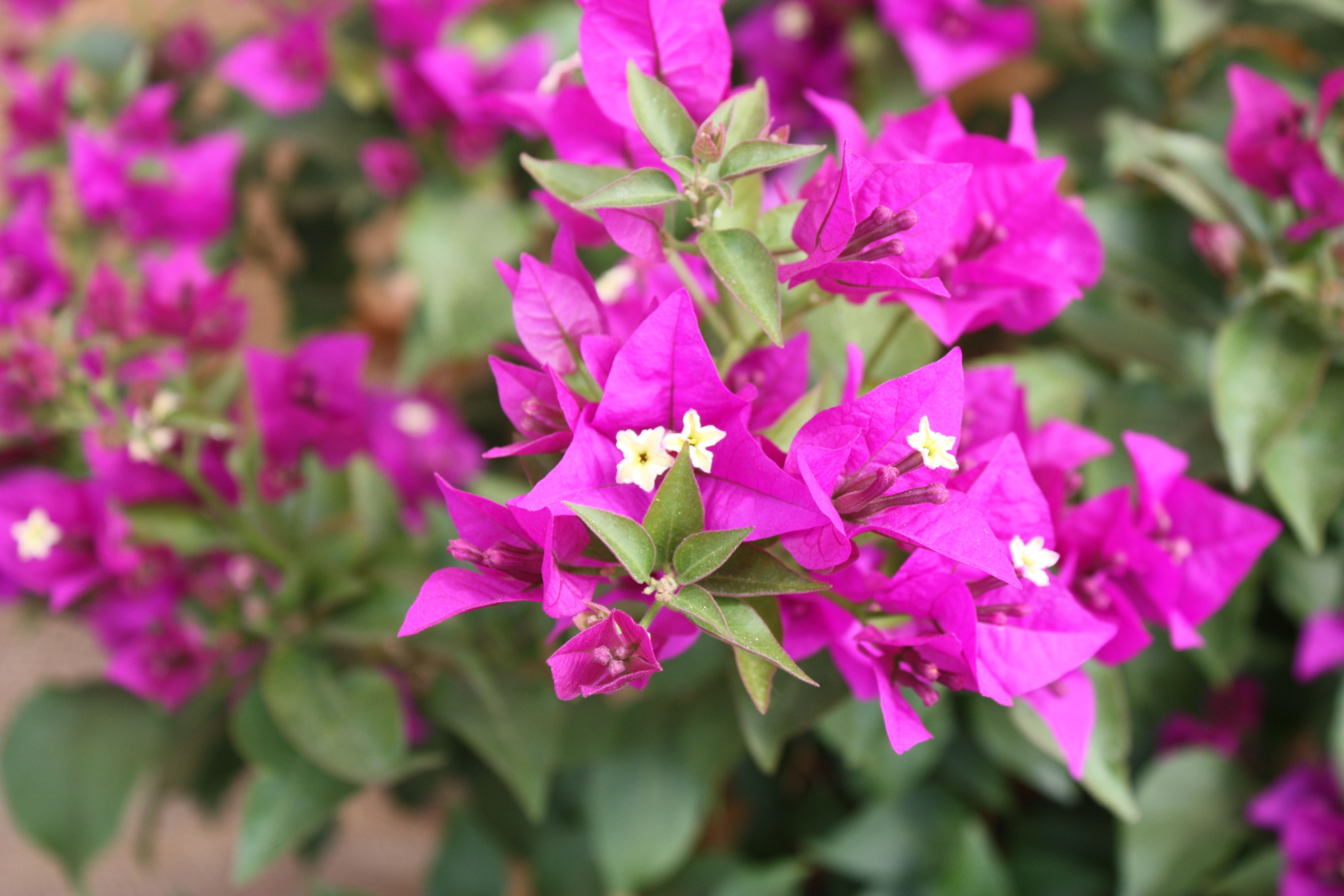
BOUGAINVILLEA glabra “Sanderiana”